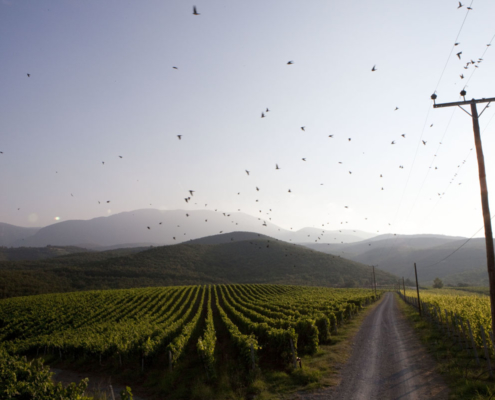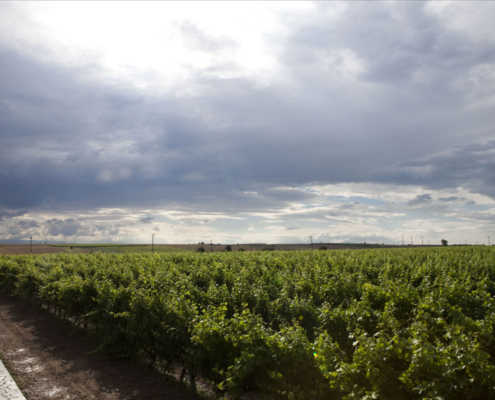
Greek PDO (ΠΟΠ) and PGI (ΠΓΕ) wines carry a unique identity. They are not simply the product of a grape variety or a specific winemaking technique. They are the result of people living in close connection with the land and the vineyard, aiming to highlight the singular character of their place. Behind every bottle—PDO (ΠΟΠ), PGI (ΠΓΕ), or Varietal Wines (Ποικιλιακοί Οίνοι)—there is a personal story: a grower, a family, or a small estate working with dedication, knowledge, and care.
In Greece, winegrowing is a lived experience. Producers are present not just in the winery, but in the vineyard—intimately familiar with every plot, every nuance of a given vintage. From the start of the growing season in spring to the moment each grape berry breaks in the crusher, the relationship is personal, hands-on, and attentive down to the last detail.
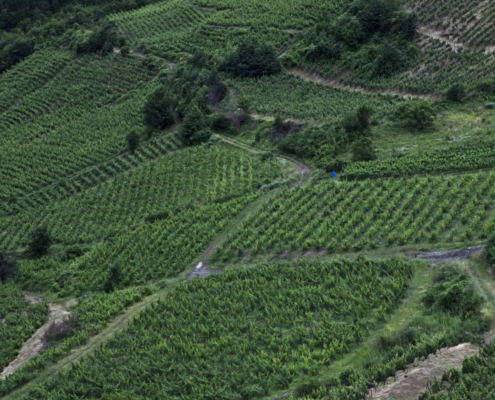
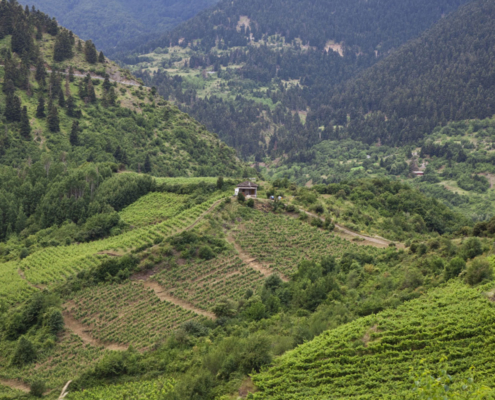
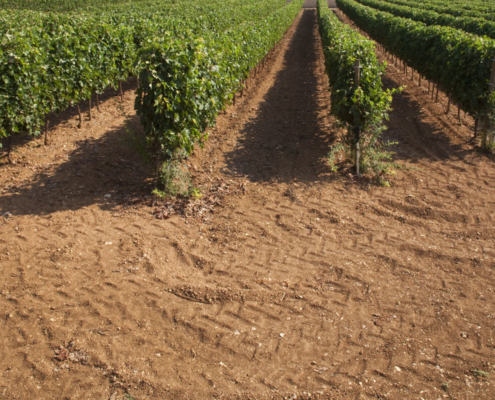
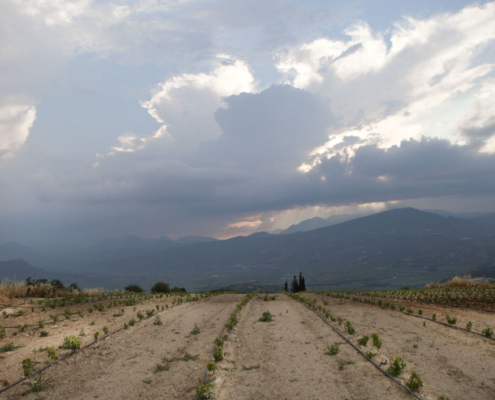
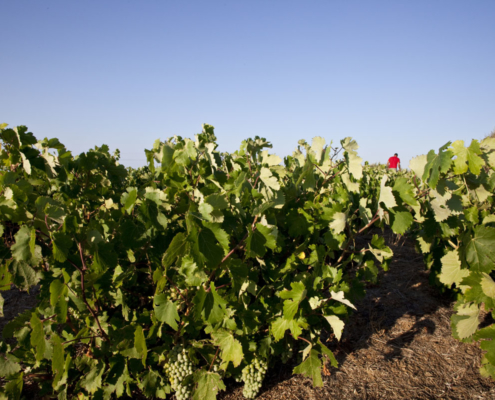
Small scale, a defining feature of Greek wine production, is a distinct advantage. It allows close monitoring, flexibility, constant refinement, and—above all—a deep connection with the land and the vine. In many areas, viticulture is entirely manual: from planting to pruning and harvest, especially in mountainous or hard-to-access vineyards arranged in terraces and dry-stone walls, such as those in PDO Samos (ΠΟΠ Σάμος), PDO Paros (ΠΟΠ Πάρος), and PDO Robola of Kefalonia (ΠΟΠ Ρομπόλα Κεφαλληνίας). In these zones, growers often hand-pick grape by grape, with absolute focus on quality.
The care given to cultivation is not a trend or fashion—it arises from the deep connection Greek producers have with their land, and from their keen understanding of the distinct character of each terroir. Vinegrowers in Greece approach the land with responsibility and perseverance. They are willing to work even the smallest, most challenging, or low-yielding plots, as long as these can produce grapes of exceptional quality. What they seek is healthy, top-quality fruit—balanced and expressive—that will ultimately become wines with purity and authentic sense of place.
Back in the winery, the meticulous work continues, where modern techniques are seamlessly combined with the wisdom of tradition. Today’s winemakers are reviving native grape varieties, cultivating old vines, and proving that Greek wine can be thoroughly contemporary without losing the advantages of its long-standing heritage.
From one end of Greece to the other, in diverse wine-producing zones such as PGI Ismaros (ΠΓΕ Ίσμαρος) in Thrace, PGI Halkidiki (ΠΓΕ Χαλκιδική) in Macedonia, PGI Meteora (ΠΓΕ Μετέωρα) in Thessaly, and PGI Atalanti Valley (ΠΓΕ Κοιλάδα Αταλάντης) in Central Greece, to the island wines of PGI Corfu (ΠΓΕ Κέρκυρα), PGI Ikaria (ΠΓΕ Ικαρία), and PGI Chania (ΠΓΕ Χανιά), there are wines that bear the unmistakable imprint of the people behind them. These are not wines made to conform—they are made to express something truly authentic.
Greece’s PDO and PGI wines are not merely products of a geographical zone. They are products of relationship—between soil, microclimate, grape variety, and the philosophy of the people who choose to give their land a voice. That’s what makes them truly unique: wines born from hands, not from production lines. Wines that tell stories. Wines that highlight their place of origin.